The Future of AI-Powered Website Analysis: Beyond Traditional UX Testing
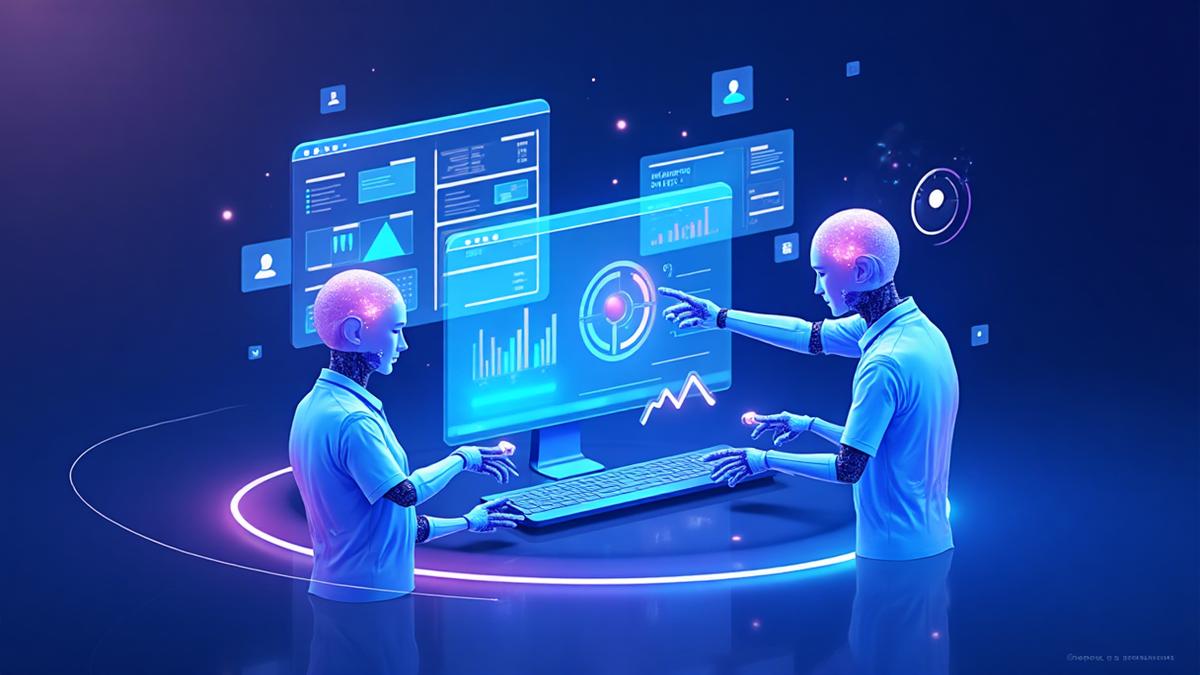
In today's digital landscape, understanding your website's user experience has never been more critical. While traditional UX testing methods have served us well, they often fall short in capturing the full spectrum of user behaviors and preferences. Enter AI-powered website analysis – a game-changing approach that's transforming how we optimize digital experiences.
The Limitations of Traditional UX Testing
Traditional UX testing has been the gold standard for decades, but it comes with significant constraints that limit its effectiveness in today's fast-paced digital environment.
Time and Resource Intensity: Conducting comprehensive user testing requires recruiting participants, scheduling sessions, facilitating interviews, and analyzing results. A single round of testing can take weeks or even months, by which time market conditions may have already shifted.
Sample Size Constraints: Most traditional testing studies involve 5-15 participants due to budget and time constraints. While qualitative insights are valuable, this small sample size makes it difficult to identify patterns that apply to your broader user base.
Observer Bias and Hawthorne Effect: When users know they're being observed, their behavior changes. Test participants often try to be "helpful" or overthink their actions, leading to insights that don't reflect real-world usage patterns.
Geographic and Demographic Limitations: Recruiting diverse user groups across different time zones, languages, and cultural contexts is expensive and logistically complex. This often results in testing that doesn't represent your actual global audience.
Snapshot vs. Continuous Insight: Traditional testing provides a snapshot of user experience at a specific moment. It can't capture how user needs evolve, how seasonal factors influence behavior, or how small iterative changes impact the overall experience over time.
The AI-Powered Advantage: A New Paradigm
AI-powered website analysis fundamentally reimagines how we understand and optimize user experiences. Instead of periodic snapshots, it offers continuous, comprehensive, and scalable insights.
Massive Scale Analysis: AI systems can simulate hundreds or thousands of user personas simultaneously, each with distinct characteristics, goals, and pain points. This scale provides statistical significance that traditional testing simply cannot match.
Real-Time Feedback Loops: Modern AI analysis happens in minutes, not weeks. You can test design changes, content updates, or new features and get comprehensive feedback before pushing to production. This enables rapid iteration and data-driven decision-making.
Unbiased Behavioral Modeling: AI personas don't suffer from observer effects or social desirability bias. They evaluate your website based purely on objective criteria aligned with their programmed goals and preferences, providing honest feedback that real users might hesitate to share.
24/7 Continuous Monitoring: Unlike human testers who need sleep and breaks, AI systems can continuously monitor your website, detecting issues and opportunities as they emerge. This is particularly valuable for global businesses operating across time zones.
Cost-Effective at Scale: After initial setup, the marginal cost of testing additional scenarios, personas, or page variations approaches zero. This democratizes sophisticated UX analysis, making it accessible to businesses of all sizes.
Understanding AI Persona Simulation

At the heart of AI-powered website analysis is persona simulation – the technology that enables artificial intelligence to evaluate websites from diverse user perspectives.
Creating Realistic Personas: Advanced AI systems create detailed personas based on demographic data, behavioral patterns, industry research, and your specific business context. These aren't simple rule-based bots; they use large language models trained on vast amounts of human behavior data to genuinely understand and evaluate user experiences.
Multi-Dimensional Evaluation: Each AI persona evaluates your website across multiple dimensions:
- Navigation Efficiency: Can they find what they're looking for quickly?
- Content Clarity: Is the messaging clear and relevant to their needs?
- Trust Signals: Does the website establish credibility and security?
- Mobile Responsiveness: How well does the experience adapt to different devices?
- Conversion Friction: What obstacles prevent them from taking desired actions?
- Emotional Response: How does the design and content make them feel?
Scenario-Based Testing: AI personas don't just browse randomly; they execute specific scenarios. For example:
- A busy executive looking for a specific product feature comparison
- A technical decision-maker evaluating security and integration capabilities
- A first-time visitor trying to understand what your company does
- A price-conscious customer comparing your offerings to competitors
- An accessibility-focused user with specific technology requirements
Pattern Recognition and Insights: Beyond individual evaluations, AI systems identify patterns across personas. Which issues affect multiple user types? Where do different personas have conflicting needs? What universal improvements would benefit everyone?
Real-World Application Scenarios
E-Commerce Optimization: An online retailer used AI persona analysis to discover that their "Compare Products" feature, while technically functional, was buried three clicks deep. High-value customer personas consistently abandoned before completing purchases. After moving comparison tools to the product page, conversion rates increased 34%.
SaaS Product Refinement: A B2B SaaS company simulated personas representing different roles within target organizations (CFO, IT Manager, End User). The analysis revealed that each role had drastically different information needs, but the website treated all visitors the same. Creating role-specific landing pages increased qualified demo requests by 52%.
Content Strategy Transformation: A media website used AI analysis to understand why engagement metrics were declining. Personas revealed that while the content quality was high, the reading experience was fragmented by aggressive ad placement and poor mobile formatting. Structural changes based on these insights reduced bounce rates by 41%.
International Expansion Planning: Before launching in new markets, a digital service used AI personas configured with region-specific cultural preferences, language nuances, and browsing behaviors. This identified critical localization issues that went beyond simple translation, saving months of trial-and-error optimization.
Technical Implementation: How It Works
Data Collection Layer: The analysis begins by comprehensively crawling your website, capturing not just visible content but also structure, navigation patterns, load times, and interactive elements. This creates a complete digital model of your user experience.
Natural Language Processing: AI systems use advanced NLP to understand your content's meaning, tone, and clarity. They evaluate whether messaging aligns with different persona motivations and comprehension levels.
Behavioral Simulation Engine: Using large language models and specialized algorithms, the system simulates how each persona would interact with your website. This includes decision-making processes, attention patterns, and emotional responses.
Comparative Analysis: The system doesn't just evaluate your site in isolation; it can compare your experience against competitors or industry best practices, providing context for every insight.
Insight Generation and Prioritization: Raw simulation data is synthesized into actionable recommendations, prioritized by potential impact and implementation difficulty. You don't get data dumps; you get a clear roadmap for improvement.
Continuous Learning: As you implement changes and collect real user data, AI systems can refine their models, making future analyses even more accurate and aligned with your specific audience.
The Future: Predictive and Prescriptive Analysis
We're moving beyond descriptive analysis ("here's what's wrong") toward predictive and prescriptive capabilities:
Predictive UX Modeling: AI will soon predict how proposed changes will impact user behavior before you implement them, using advanced simulation and historical pattern analysis. Test ten design variations in simulation before building a single one.
Automated A/B Test Design: Instead of manually hypothesizing what to test, AI will identify the highest-potential optimization opportunities and automatically design experiments to validate them.
Personalization at Scale: Rather than delivering the same experience to everyone, AI will enable dynamic personalization that adapts in real-time to individual user characteristics and behaviors, all informed by comprehensive persona analysis.
Proactive Issue Detection: AI systems will identify emerging UX problems before they significantly impact metrics, alerting you to issues like declining mobile performance, confusing new content, or broken user flows.
Cross-Platform Experience Optimization: As users interact with your brand across websites, apps, and other touchpoints, AI will ensure consistent, optimized experiences across all channels.
Embracing the AI-Powered Future
AI-powered website analysis doesn't replace human insight and creativity; it amplifies them. Designers and marketers can spend less time on tedious testing logistics and more time crafting experiences informed by comprehensive, unbiased data.
The question is no longer whether AI will transform UX analysis, but how quickly businesses will adopt these capabilities. Those who embrace AI-powered insights today will build better experiences, convert more visitors, and ultimately outpace competitors still relying solely on traditional methods.
The future of website optimization is here. It's intelligent, scalable, and more accessible than ever before.
Ready to experience AI-powered website analysis for yourself? Try our platform today and see how AI agents can transform your digital presence.